









Introduction
Vitilinox is a name that has started appearing more often in searches related to vitiligo, pigmentation, and skin care. People looking for ways to manage visible white patches naturally may come across the product while researching alternatives to conventional treatment. That naturally leads to questions about what Vitilinox is, what it contains, how it is supposed to work, and whether its claims are supported by reliable evidence.
The information available online is not completely consistent. Some sources describe Vitilinox as a supplement, while others discuss a topical cream or skin-support product. The current product website presents it primarily as a supplement containing more than 12 active ingredients. Because product formulations and descriptions can change, checking the current packaging and manufacturer information is essential before using it.
Vitiligo itself is a chronic condition involving the loss of pigment-producing melanocytes. It can cause lighter or completely white patches on different parts of the body. Understanding the condition is important before deciding whether a product such as Vitilinox is appropriate.
What Is Vitilinox?
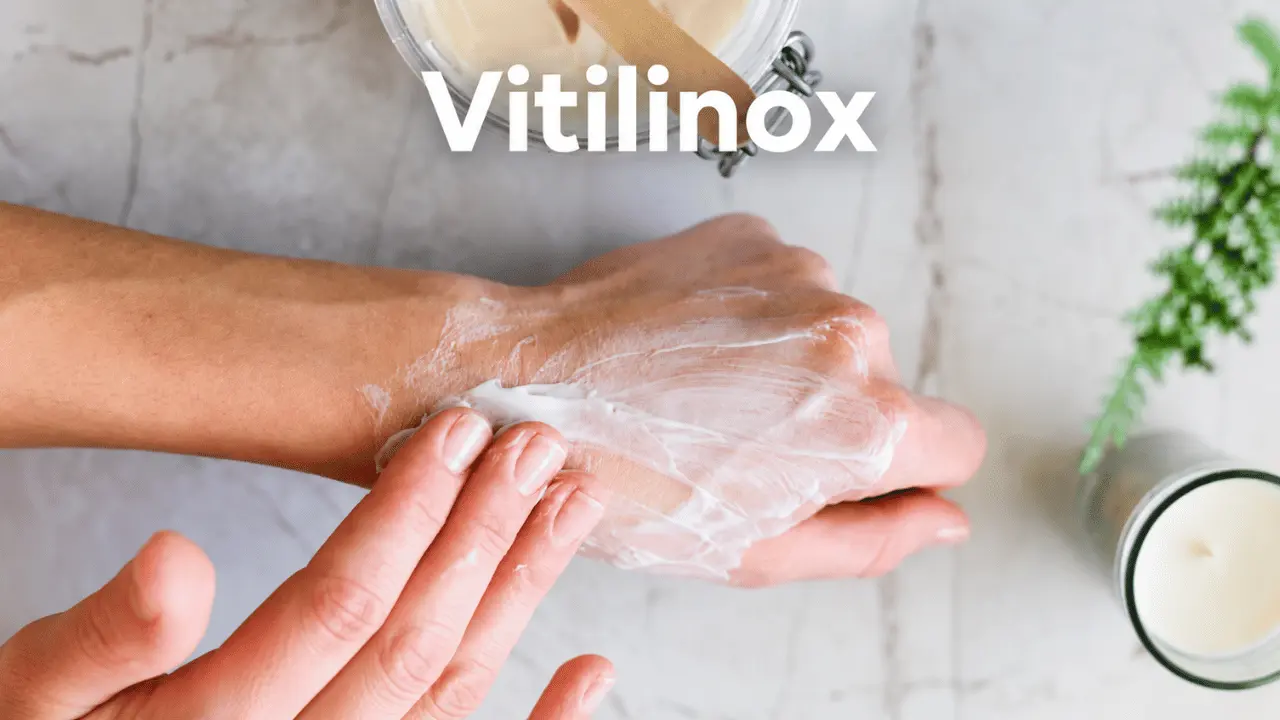
Vitilinox is marketed as a product intended to support people dealing with pigmentation concerns associated with vitiligo. Its marketing focuses on supporting melanocyte activity, skin health, antioxidant protection, and the body’s natural pigmentation processes.
The product website currently describes Vitilinox as a precision-formulated supplement and promotes it as a natural approach to supporting skin pigment. Other online sources have described Vitilinox as a topical product, which creates an important distinction for anyone researching it.
This means readers should not assume that every description found online refers to exactly the same formulation. Before purchasing, the product name, form, ingredient list, serving instructions, manufacturer, and intended use should all be checked carefully.
Vitilinox should also not automatically be considered a medical treatment simply because it is marketed for people with vitiligo. A product’s marketing purpose and its clinical status are two different things.
What Is Vitiligo?
Vitiligo is a condition in which areas of the skin lose their normal pigment. It happens when melanocytes, the cells responsible for producing melanin, are damaged or destroyed.
The condition can affect almost any area of the body. White patches may appear on the face, hands, arms, legs, feet, or around body openings. Hair in affected areas can also lose pigment.
Vitiligo is widely understood as an autoimmune condition. The immune system mistakenly targets melanocytes, leading to the loss of pigment in affected areas. Genetics, oxidative stress, and other biological factors are also being studied in relation to the condition.
For many people, the biggest difficulty is not physical discomfort but the visible change in appearance. Skin color differences can affect confidence, social interactions, and emotional well-being.
That is one reason searches for products such as Vitilinox continue to attract attention.
Why Are People Interested in Vitilinox?
People searching for Vitilinox are usually looking for practical answers rather than simply wanting to know the product name.
Common questions include whether it can help restore pigmentation, what ingredients it contains, how long results may take, whether it is safe, and whether it can be used alongside conventional vitiligo treatment.
The attraction is understandable. Medical treatment can involve prescription creams, phototherapy, repeated appointments, or long treatment periods. A product that can be incorporated into a daily routine may appear easier and more convenient.
However, convenience should not be confused with effectiveness. A product needs evidence behind the specific formulation before strong treatment claims can be made.
Vitilinox Ingredients
Ingredient information is one of the areas where online descriptions require particular caution.
Some websites discussing Vitilinox associate it with ingredients such as babchi, L-phenylalanine, ginkgo biloba, vitamin D3, zinc, copper, and B vitamins. Another current product page states that the formula contains more than 12 active ingredients but does not establish that every ingredient mentioned on independent websites belongs to the current formulation.
That distinction matters.
An ingredient can have scientific research behind it without proving that the complete commercial product produces the same result. Research on an individual compound does not automatically validate a particular supplement, cream, dose, or combination of ingredients.
Babchi and Skin Pigmentation
Babchi, also known as Psoralea corylifolia, is a plant traditionally associated with pigmentation-related skin care. Compounds from this plant have been investigated because of their potential effects on pigmentation.
However, babchi-based products also require caution. Certain compounds associated with the plant can increase sensitivity to light, and topical use is not automatically risk-free.
Anyone considering a product containing babchi should check the current ingredient list and follow the manufacturer’s safety instructions.
Ginkgo Biloba
Ginkgo biloba has attracted research interest because of its antioxidant and biological properties. It has also been studied in relation to vitiligo, although evidence involving an individual ingredient should not be confused with evidence proving that Vitilinox itself treats the condition.
People taking medicines, particularly medicines that affect blood clotting, should discuss ginkgo-containing supplements with a healthcare professional before use.
Vitamins and Minerals
Some Vitilinox descriptions also mention nutrients such as vitamin D, zinc, copper, and B vitamins. These nutrients have important roles in normal biological processes.
That does not mean taking more of them will automatically restore skin pigment. Nutritional supplements are most useful when they address an actual nutritional need or deficiency. Excessive intake of certain vitamins or minerals can also cause problems.
The current product label should therefore be used to confirm the actual ingredients and amounts.
How Is Vitilinox Supposed to Work?
The basic idea behind Vitilinox is to provide nutritional or botanical support for processes associated with healthy skin and pigmentation.
The product’s marketing focuses on melanocyte support, antioxidant activity, and the body’s natural pigment-producing processes. These concepts relate to areas that researchers have investigated in vitiligo, including oxidative stress and melanocyte function.
But there is an important line between biological reasoning and clinical proof.
A compound may influence a biological pathway in laboratory research without producing meaningful repigmentation in people. The same applies to individual ingredients studied separately.
For that reason, claims about Vitilinox should be evaluated according to evidence for the finished product rather than simply the reputation of its individual ingredients.
Potential Benefits of Vitilinox
The potential benefits promoted around Vitilinox are mainly connected with pigmentation support and general skin health.
Depending on the formulation, people may be interested in it because they want nutritional support, antioxidant support, or an addition to their existing skin-care routine.
Some online user reports also describe improvements in skin appearance, hydration, or gradual changes in pigmentation. However, user experiences are not the same as controlled clinical trials. Individual results can be affected by other treatments, natural changes in vitiligo, lighting, skin tone, photography, and many other factors.
A responsible expectation is therefore more useful than a promise of dramatic results.
Vitilinox should not be described as a guaranteed cure for vitiligo.
Does Vitilinox Cure Vitiligo?
There is no reliable basis for describing Vitilinox as a guaranteed cure for vitiligo.
Vitiligo is an autoimmune condition, and established treatment focuses on controlling the condition and encouraging repigmentation where possible. Treatment response differs from one person to another.
The current evidence-based treatment landscape includes options such as topical corticosteroids, calcineurin inhibitors, phototherapy, and topical ruxolitinib for eligible patients. The FDA approved ruxolitinib cream for nonsegmental vitiligo in patients aged 12 and older, giving it a very different evidence and regulatory position from a general skin-support supplement.
This does not mean every person with vitiligo needs prescription medication. Treatment decisions depend on the type of vitiligo, affected areas, extent of pigment loss, age, medical history, and personal preferences.
The important point is that Vitilinox should not be presented as a replacement for proven medical care without strong clinical evidence supporting that claim.
Vitilinox and Conventional Vitiligo Treatment
The biggest difference between Vitilinox and established medical treatments is the amount and type of evidence behind them.
Prescription treatments undergo formal evaluation for safety and effectiveness. Phototherapy is also supported by clinical research and is commonly used by dermatologists for appropriate patients.
Vitilinox occupies a different position. Current online information presents it as a complementary or natural support product, while independent large-scale clinical evidence for the finished product remains difficult to establish from publicly available sources.
That does not automatically mean the product is ineffective. It means the available evidence does not justify making stronger claims than the research supports.
Is Vitilinox Safe?
Safety depends on the exact formulation, ingredients, dosage, method of use, and individual circumstances.
Natural ingredients can still cause side effects. Some botanical compounds may irritate the skin or increase sensitivity to sunlight. Supplements can also interact with prescription medicines.
People who are pregnant, breastfeeding, taking medication, have allergies, or have an existing medical condition should speak with a healthcare professional before starting a new supplement or skin product.
Anyone who experiences significant irritation, swelling, severe redness, blistering, or another unexpected reaction should stop using the product and seek medical advice.
The phrase “natural” should never be treated as a guarantee of safety.
How Long Does Vitilinox Take to Work?
There is no dependable timeframe that guarantees when Vitilinox will produce visible pigmentation changes.
Vitiligo itself can behave differently from one person to another. Some areas may respond to treatment more readily than others, and repigmentation can take considerable time.
Some websites promoting Vitilinox mention results within weeks or several months, but these timeframes should be treated as marketing or anecdotal claims unless they are supported by properly designed clinical research on the exact product.
Before-and-after photographs also need to be viewed carefully. Lighting, camera exposure, tanning, skin preparation, and other treatments can make pigmentation look different even when the underlying condition has not changed substantially.
What Should You Check Before Buying Vitilinox?
Anyone researching Vitilinox should check several things before making a purchase.
Check the Current Ingredient Label
Do not rely solely on an old blog post or social media advertisement. Product formulations can change, and online descriptions may not match the current packaging.
Check the Recommended Dosage
More is not necessarily better. Follow the manufacturer’s stated dosage unless a qualified healthcare professional recommends otherwise.
Check for Possible Interactions
If you take prescription medication, ask a pharmacist or doctor whether the ingredients are appropriate for you.
Avoid Guaranteed-Cure Claims
Claims promising permanent or guaranteed restoration of skin color should be treated with caution. Vitiligo is complex, and no responsible treatment can promise identical results for everyone.
Consider Professional Diagnosis
Not every white patch is vitiligo. Several skin conditions can cause changes in pigmentation. A dermatologist can determine the cause and recommend suitable treatment.
Can Vitilinox Be Used With Other Treatments?
Whether Vitilinox can be combined with another treatment depends on its exact formulation and the other treatment being used.
Someone undergoing phototherapy or using prescription medication should not assume that adding a supplement or topical product is automatically safe. A dermatologist or pharmacist can check the ingredients and possible interactions.
This is particularly relevant when a product contains botanical compounds or concentrated nutrients.
A sensible approach is to keep your dermatologist informed about everything you are applying to your skin or taking by mouth.
What Does the Evidence Say About Vitilinox?
The evidence needs to be separated into two categories.
The first category is research involving individual ingredients or biological mechanisms associated with pigmentation and vitiligo. Some ingredients promoted in natural vitiligo products have been studied in scientific research.
The second category is research on the complete Vitilinox product.
These are not the same thing.
Current search results provide extensive marketing information about Vitilinox, including claims concerning melanocyte support, pigmentation, customer satisfaction, and product formulation. However, the search results did not establish a large, independent, peer-reviewed clinical trial demonstrating that the finished Vitilinox product reliably treats or reverses vitiligo.
That is the most important distinction readers should understand.
Should You Consider Vitilinox?
Vitilinox may interest people who want to explore complementary approaches to skin and pigmentation support. But it should be approached with realistic expectations.
Before using it, check the current formulation, understand the ingredients, consider possible interactions, and speak with a healthcare professional if you have concerns about your skin or medications.
If you have not been diagnosed with vitiligo, getting a professional diagnosis should come before choosing a treatment.
For someone already receiving medical care, a product such as Vitilinox should not be used as a reason to stop prescribed treatment without speaking to the treating professional.
Final Thoughts
Vitilinox has gained attention because it sits at the intersection of natural skin care, nutritional support, and interest in vitiligo management. The product is marketed around pigmentation and melanocyte support, but the information available online is not completely consistent about its exact formulation or form.
The strongest way to evaluate Vitilinox is to look beyond marketing language. Check the current ingredient label, understand what each ingredient is actually supported to do, and distinguish research on individual compounds from research on the finished product.
Most importantly, vitiligo should be treated as a medical condition rather than simply a cosmetic problem. Established treatments have clinical evidence behind them, while the evidence for Vitilinox as a complete product remains much less established.
A realistic approach is therefore the best one: learn what the product contains, understand its limitations, avoid guaranteed-result claims, and involve a qualified healthcare professional when making treatment decisions.
Frequently Asked Questions
1. What is Vitilinox?
Vitilinox is marketed as a product associated with vitiligo and pigmentation support. Current online product information describes it as a supplement, while some other sources discuss topical versions. Because descriptions vary, the current product packaging should be checked for the exact form and formulation.
2. Can Vitilinox permanently cure vitiligo?
There is no reliable evidence that Vitilinox provides a guaranteed permanent cure for vitiligo. Vitiligo is an autoimmune condition, and treatment response varies considerably between individuals.
3. What ingredients are found in Vitilinox?
Online sources associate Vitilinox with ingredients including babchi, L-phenylalanine, ginkgo biloba, vitamin D3, zinc, copper, and B vitamins, while the current product website states that its formula contains more than 12 active ingredients. Because online ingredient lists are not fully consistent, the current product label should be treated as the authoritative source.
4. How long does Vitilinox take to show results?
There is no clinically established timeframe that guarantees when Vitilinox will produce visible pigmentation changes. Claims of results within a specific number of weeks or months should not be treated as guaranteed unless supported by clinical evidence for the finished product.
5. Is Vitilinox a replacement for dermatologist treatment?
Vitilinox should not automatically be considered a replacement for established medical treatment. People with diagnosed or suspected vitiligo should discuss treatment options with a qualified dermatologist, particularly when pigmentation loss is spreading or the diagnosis has not been confirmed.
Read More: M6 Walsall Birmingham Lanes Closure: Roadworks, Junctions and Travel Impact