









Introduction
The word piragnia can be confusing when it first appears in a search. It looks like the name of a particular animal, and because it resembles the word piranha, many people naturally wonder whether the two are different types of fish. Some readers may even assume that piragnia is the name of an unusual or rarely discussed species.
The reality is much simpler. There is no widely accepted scientific classification for a fish called piragnia. The term is mainly encountered online as a spelling variation or mistaken form of piranha. The real animal behind the confusion is the piranha, a group of freshwater fish associated with South American river systems.
Understanding this distinction is important because the internet can make an unfamiliar spelling appear legitimate simply through repetition. Once a word is copied across websites, search results, social posts, and captions, readers may assume that it represents an established scientific term. In this case, the evidence points toward piranha rather than a separate fish species.
What Is Piragnia?
Piragnia is best understood as an informal spelling variation associated with the word piranha. It is not recognized as the standard name of a separate fish species in the commonly referenced biological information available online.
The confusion is understandable because piranha is a distinctive word, and its spelling may be difficult for someone who has only heard it spoken. A person might reproduce the sound differently when typing it, creating a variation such as piragnia. Once that variation is published online, other people can encounter it and repeat it in their own searches or content.
This does not mean that the term has no value as a search query. People genuinely search for unfamiliar words because they want to know what they mean. For that reason, explaining the term accurately is more useful than pretending that it represents a species that science does not recognize.
Why the Name Causes Confusion
The similarity between piragnia and piranha is the main source of confusion. The two words look and sound close enough that a reader who is unfamiliar with the correct spelling may assume they describe different animals.
Online repetition can make this problem even more noticeable. A misspelled word may appear in multiple places, and readers may begin to believe that repeated usage proves that the word is official. In reality, repetition and scientific recognition are two different things.
For this reason, piragnia should be discussed carefully. It is appropriate to explain why people encounter the term, but it would be misleading to describe it as a confirmed species name.
Piragnia vs. Piranha: What Is the Difference?
The clearest distinction is straightforward: piranha is the established term used for a group of freshwater fish, while piragnia is generally encountered as an alternative or incorrect spelling connected with piranha.
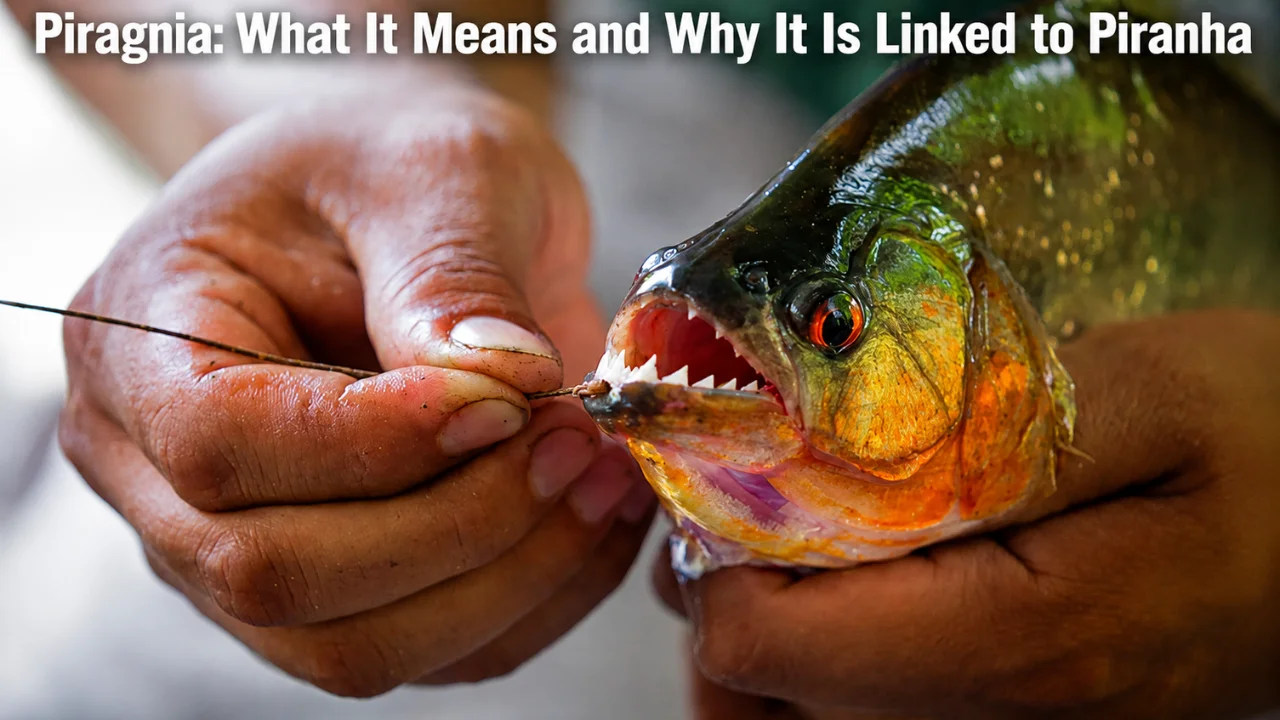
Piranhas belong to the family Serrasalmidae and include multiple species. They are known for their distinctive teeth, strong jaws, varied diets, and association with freshwater environments in South America.
This means that a person searching for piragnia fish will usually find more useful information by researching piranhas. Information about their habitat, feeding habits, behavior, physical features, and ecological role applies to the real fish that the unusual spelling is generally intended to describe.
Is Piragnia a Separate Fish Species?
There is no reliable basis for treating piragnia as a separate recognized fish species. Current online references discussing the term consistently explain it as a variation or misspelling related to piranha.
A scientific species requires formal recognition and classification. Simply appearing on websites does not establish a biological species. This distinction is especially important when discussing wildlife because incorrect names can easily lead to inaccurate information about an animal’s habitat, behavior, or conservation status.
What Are Piranhas?
Piranhas are freshwater fish best known for their sharp teeth and powerful jaws. They are native to South America and are associated with several major freshwater systems.
Although popular culture often presents piranhas as extremely aggressive predators, their actual biology is more varied. Different species have different feeding preferences and behaviors, and not every piranha follows exactly the same lifestyle.
Their reputation has made them one of the world’s most recognizable freshwater fish. However, their real ecological role is more interesting than the dramatic image commonly shown in fictional stories.
Where Do Piranhas Live?
Piranhas are primarily associated with freshwater environments in South America. Their distribution includes river systems and connected aquatic habitats in tropical regions.
The Amazon Basin is particularly famous for piranhas, but their range is not limited to one river. Different species occur in different parts of South America’s freshwater networks.
These environments provide the food, shelter, and water conditions needed by piranhas and many other aquatic organisms. Seasonal changes in water levels can also influence how fish use their surroundings.
What Do Piranhas Eat?
Piranha diets vary depending on the species and the environment. Some feed on other fish and aquatic animals, while others can consume insects, crustaceans, fruits, seeds, and plant material.
This variety challenges the popular idea that every piranha is simply a meat-eating predator. Feeding behavior can change according to food availability, season, species, and habitat conditions.
Some piranhas are opportunistic feeders, meaning they can make use of different food sources when those resources are available. This flexibility helps them survive in environments where food supplies can change throughout the year.
Understanding Piranha Behavior
Piranha behavior is another area where popular stories can create an exaggerated impression. Some species are known to gather in groups, while their behavior can change depending on environmental conditions and potential threats.
Living in groups can provide advantages in the wild. Fish may benefit from greater awareness of predators and increased opportunities to locate food.
Their behavior should not be interpreted through fictional portrayals alone. Piranhas are wild animals with natural feeding and defensive behaviors, rather than creatures that constantly seek opportunities to attack people.
Are Piranhas Dangerous?
Piranhas have sharp teeth and strong jaws, so they deserve respect as wild animals. However, the dramatic image of piranhas immediately attacking humans is heavily influenced by popular culture.
Their actual behavior depends on several factors, including species, food availability, environmental conditions, and the circumstances of an encounter.
Many stories about piranhas have been exaggerated over time. Movies and sensational accounts have helped create the image of a fish capable of rapidly consuming large animals. Real-world biology presents a more complicated picture.
Why Does Piragnia Appear in Online Searches?
The continued appearance of piragnia online is an interesting example of how unusual spellings can develop a digital presence.
A person may hear the word piranha without seeing it written down and later spell it according to how it sounds. Another person may encounter that spelling and repeat it. Websites can then publish the same variation, causing search engines to index it.
Over time, the unusual spelling becomes easier to find. Readers who see it repeatedly may assume that it must have an official meaning.
This is one reason unusual search terms deserve careful explanation. Search visibility does not automatically prove scientific validity.
How Online Language Creates Confusion
The internet allows words to spread much faster than traditional language normally does. A spelling mistake can be copied thousands of times without anyone checking its original source.
This can happen with names of animals, places, products, historical figures, and scientific subjects. Once the incorrect version becomes familiar, it can seem completely normal to new readers.
The story of piragnia fits this broader pattern. The term attracts attention because it looks like a genuine name, while its close connection to piranha gives readers an obvious reason to investigate it.
Common Myths Connected With Piranhas
Piranhas have accumulated numerous myths because of their appearance and reputation.
One common misconception is that all piranhas are constantly aggressive. In reality, behavior differs among species and situations.
Another misconception is that every piranha eats only meat. As discussed above, diets can include a variety of foods.
There is also a tendency to describe all piranhas as one identical type of fish. They are actually a diverse group with differences in diet, appearance, behavior, and ecological habits.
Separating these myths from established information makes it easier to understand why the real fish is so interesting.
Why Accurate Terminology Matters
Using accurate terminology is particularly important when discussing animals. A wrong name can create a chain of additional mistakes.
For example, if someone assumes piragnia is a separate species, they may start looking for its scientific name, habitat, conservation status, or population numbers. If those details are then invented or copied from another animal, the resulting information becomes unreliable.
The better approach is to identify the terminology issue first and then move to the real subject: piranhas and their biology.
This makes the subject easier to understand and prevents a spelling variation from being presented as a scientific discovery.
The Real Story Behind Piragnia
The most interesting thing about piragnia is not the existence of a mysterious fish. It is the confusion created when an unusual spelling begins circulating online.
Piranhas are real animals with established biological classifications, recognizable physical features, diverse diets, and important roles within freshwater ecosystems. The word piragnia, however, does not have the same scientific standing.
That distinction gives readers a much clearer understanding of what they are actually searching for. Instead of treating an unfamiliar spelling as proof of a rare species, it is better to trace the term back to the established word and examine the real animal behind it.
Final Thoughts
Piragnia is best understood as a spelling variation or mistaken form associated with piranha rather than the name of a separate, scientifically recognized fish. The confusion largely comes from the similarity between the two words and the way unusual spellings can spread across the internet.
Piranhas themselves are fascinating freshwater fish. Their South American habitats, varied diets, distinctive teeth, social behavior, and role in aquatic ecosystems make them far more interesting than the exaggerated image often presented in popular culture.
When an unfamiliar wildlife term appears online, checking whether it represents an established scientific name is essential. In this case, the evidence points clearly toward piranha as the genuine biological subject, while piragnia remains an informal internet spelling that can cause unnecessary confusion.
Frequently Asked Questions
1. What does piragnia mean?
Piragnia is generally used online as a spelling variation or mistaken form of piranha. It is not widely recognized as the official name of a separate fish species.
2. Is piragnia a real species of fish?
No recognized scientific classification establishes piragnia as a separate fish species. The term is generally connected with piranha rather than a distinct animal.
3. Are piragnia and piranha the same thing?
The terms should not be treated as two separate fish species. Piranha is the established term for the real freshwater fish, while piragnia is generally an alternative or incorrect spelling.
4. Where are piranhas found?
Piranhas are freshwater fish primarily associated with South American river systems and related aquatic environments. The Amazon Basin is particularly well known for its piranha populations.
5. Do piranhas really attack humans?
Piranhas are wild fish with sharp teeth and strong jaws, but their reputation for constantly attacking humans is exaggerated. Their behavior varies according to species, environmental conditions, and available food.
Read More: Ểmgency: Understanding Its Meaning, Spelling, and Online Use