








Introduction
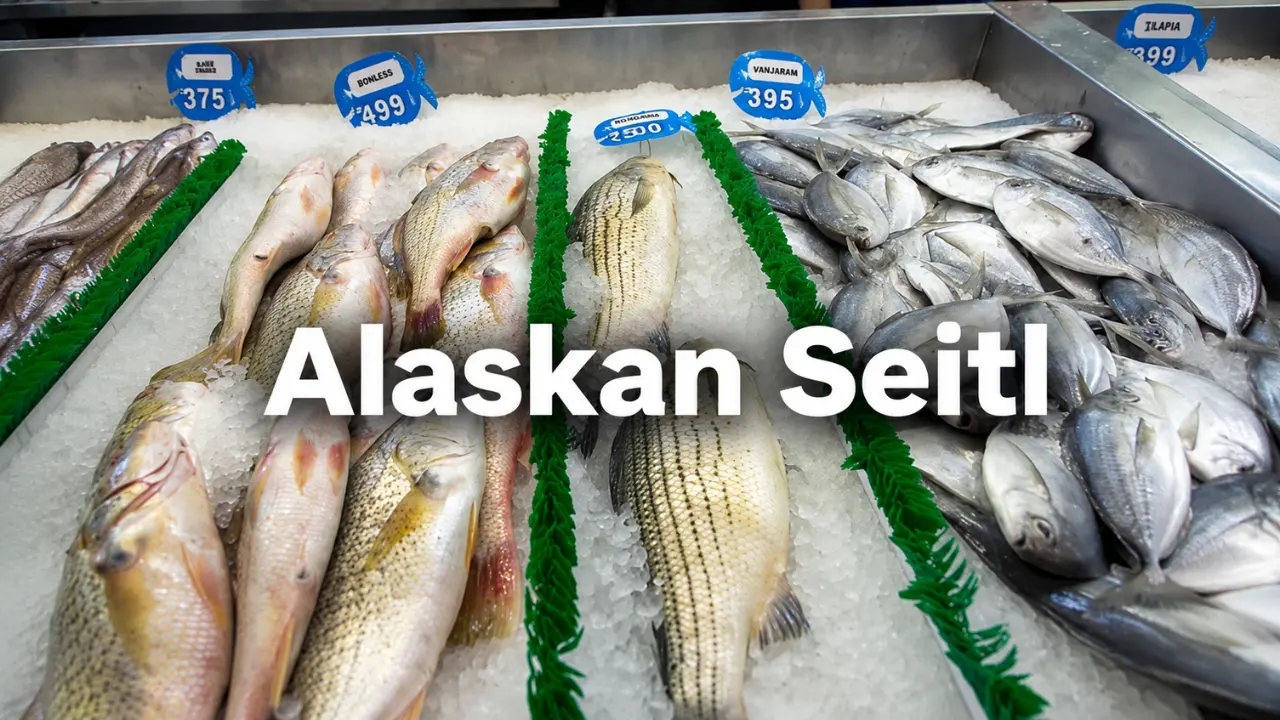
The term alaskan seiti can lead readers to a fish that is better known in seafood references as Alaska pollock or walleye pollock. The species behind that name is Gadus chalcogrammus, a member of the cod family Gadidae. U.S. seafood references identify it as Pollock for market purposes and Walleye Pollock as its common name.
Alaska pollock is one of the most commercially important fish in the North Pacific. It is valued for its mild flavor, fine texture, high protein content, and versatility in both household cooking and large-scale seafood processing. It is also a major species in the Bering Sea and Gulf of Alaska fisheries, making it important not only as food but also to the wider seafood economy.
What Does alaskan seiti Refer To?
Understanding the Name
For readers searching for alaskan seiti, the most relevant established fish is Alaska pollock. The official scientific name is Gadus chalcogrammus. The fish belongs to the Gadidae family, which also includes species such as Pacific cod, Atlantic cod, and haddock.
The name can be confusing because the word pollock is also used for other fish. Atlantic pollock, for example, is a different species known scientifically as Pollachius virens. Alaska pollock should therefore not be treated as another name for Atlantic pollock or Pacific cod.
The Scientific Identity
Gadus chalcogrammus is a North Pacific groundfish that has become one of the most heavily harvested fish species in the region. NOAA Fisheries describes it as a semipelagic schooling fish, meaning it can live in the water column rather than remaining exclusively on the seafloor.
This distinction is useful when researching alaskan seiti because it separates the species from unrelated fish that may share similar common names in different markets.
Where Does Alaska Pollock Live?
Main Geographic Range
Alaska pollock is distributed throughout the North Pacific Ocean, with its largest concentrations found in the eastern Bering Sea. It also occurs around the Gulf of Alaska and the Aleutian Islands.
These waters provide the cold marine environment in which the species thrives. The fish commonly forms large schools, allowing substantial populations to be monitored and managed as part of commercial fisheries.
Preferred Water Depth
Alaska pollock can occupy different parts of the water column as it grows. Younger fish are generally found in mid-water areas, while older pollock, particularly fish around five years of age and older, tend to stay closer to the ocean floor. NOAA reports that pollock commonly swim in large schools at depths of roughly 330 to 985 feet, although individuals can sometimes occur as deep as about 3,300 feet.
These habitat patterns are important to fisheries scientists because surveys help estimate where fish are located and how abundant different age groups are.
What Does Alaska Pollock Look Like?
General Appearance
Alaska pollock has the streamlined shape common among cod-family groundfish. Its coloration generally includes darker tones along the upper body that become lighter toward the underside.
Its biology is especially interesting because the fish is adapted to life in a changing ocean environment and can move between different depths. Large schools also make the species particularly important for scientific surveys and commercial harvesting.
Growth and Population Monitoring
Because Alaska pollock supports such a large fishery, scientists regularly monitor its abundance and distribution. NOAA conducts acoustic and trawl surveys in the eastern Bering Sea to measure pollock numbers, size, age, and spatial distribution. The survey information is used as part of the scientific basis for fishery management.
What Does Alaska Pollock Taste Like?
Mild and Delicate Flavor
One of the biggest reasons Alaska pollock is widely used as food is its mild taste. NOAA describes the flesh as mild and similar to other white fish such as cod and haddock.
That relatively neutral flavor makes the fish flexible in the kitchen. Strong sauces, herbs, spices, breading, citrus, and other seasonings can be paired with it without being overwhelmed by a strong fishy taste.
Fine Texture
Alaska pollock also has a relatively fine texture. This characteristic makes it suitable for different preparation methods and helps explain why the fish is sold in several forms, from individual fillets to processed seafood products.
For someone discovering alaskan seiti, the combination of mild flavor and useful texture is one of the easiest ways to understand why Alaska pollock has become so common in seafood markets.
Alaska Pollock Nutrition
Protein and Calories
Alaska pollock has a notably lean nutritional profile. According to NOAA Fisheries, a 100-gram raw serving contains approximately 81 calories and 17.18 grams of protein. The same serving contains about 0.8 grams of total fat and no carbohydrates.
This makes it a useful protein source for meals where a person wants a lean seafood option.
Other Nutrients
A 100-gram raw serving also provides nutrients including selenium and omega-3 fatty acids. NOAA lists approximately 21.9 micrograms of selenium in that serving.
The nutritional values can change depending on cooking and preparation. A plain baked fillet, for example, will have a different overall nutritional profile from a fried or heavily breaded pollock product.
How Is Alaska Pollock Used?
Fresh and Frozen Fillets
Fillets are one of the most recognizable ways to eat Alaska pollock. The fish can be baked, pan-cooked, fried, or incorporated into a wide range of seafood dishes.
NOAA reports that close to half of Alaska pollock products are sold as fillets. Fresh availability varies seasonally, while frozen pollock is available throughout the year.
Surimi and Processed Seafood
Alaska pollock is also extremely important to seafood processing. NOAA reports that roughly a quarter of pollock products are made into surimi, which is used in products designed to resemble seafood such as imitation crab.
Another major commercial product is roe, while fillets account for the largest share of the product mix.
This is why alaskan seiti is not simply a topic about a fish fillet. The species is connected to a much larger food-processing industry that supplies seafood products to consumers in many countries.
How Can Alaska Pollock Be Cooked?
Baking
Baking is a simple way to prepare pollock while allowing its mild flavor to remain noticeable. Herbs, garlic, lemon, pepper, and light sauces can complement the fish without overpowering it.
Pan-Cooking
Pan-cooking can provide a lightly browned exterior while keeping the inside tender. The method works particularly well with fillets that have been seasoned before cooking.
Frying and Breading
Because the fish has a mild taste, it can also be paired with a crisp coating. Fried pollock is used in a number of commercial and home-style seafood dishes.
Soups, Tacos, and Seafood Meals
The fish can also be added to soups, seafood bowls, tacos, sandwiches, and similar dishes. Its relatively subtle flavor allows it to work with different cuisines and seasoning styles.
Why Is Alaska Pollock So Important Commercially?
One of the World’s Largest Fisheries
Alaska pollock is the target species of one of the world’s largest fisheries. NOAA reports that commercial landings from the Bering Sea and Gulf of Alaska exceeded 3 billion pounds in 2024, with an estimated value of approximately $432 million.
The majority of the U.S. pollock catch comes from the Bering Sea, which makes this region especially important to the fishery.
Importance to Seafood Supply
The large volume of pollock harvested helps supply fresh and frozen fish as well as processed seafood products. Because fillets, surimi, and roe all have commercial markets, the species supports several parts of the seafood supply chain.
Its widespread use also means that consumers may encounter Alaska pollock without immediately recognizing the species name on the product.
Is Alaska Pollock Sustainably Managed?
Fishery Management
Sustainability is an important consideration for a fishery of this size. NOAA Fisheries states that U.S. wild-caught Alaska pollock is sustainably managed and responsibly harvested under U.S. regulations. The fishery is managed by NOAA Fisheries and the North Pacific Fishery Management Council under management plans covering the Gulf of Alaska and the Bering Sea/Aleutian Islands.
NOAA currently reports that the Aleutian Islands, eastern Bering Sea, and western, central, and west Yakutat Gulf of Alaska stocks are not overfished, while the fishery itself is not subject to overfishing.
Monitoring and Bycatch
Large commercial fisheries still require continuous monitoring. NOAA reports that less than 1 percent of the total catch in the Alaska pollock fishery consists of other species, while Pacific salmon bycatch remains a particular management concern because salmon are important to commercial and subsistence fisheries.
Scientific surveys, catch monitoring, and management rules all play a role in keeping the fishery under control.
Alaska Pollock vs. Cod
They Are Related but Different
Alaska pollock and Pacific cod belong to the same broader cod family, but they are different species. Alaska pollock is Gadus chalcogrammus, whereas Pacific cod is Gadus macrocephalus. The FDA lists them separately in its seafood database.
Both can be used as mild white fish, but they differ in species identity, commercial uses, and typical product forms.
Why the Comparison Matters
People searching for alaskan seiti may encounter Alaska pollock alongside cod in seafood markets. Knowing that the two are related but not identical makes it easier to understand product labels and choose the fish that best fits a particular meal.
Why Is alaskan seiti Interesting to Seafood Readers?
The subject brings together several useful areas of information: species identification, marine habitat, nutrition, cooking, commercial fishing, and sustainability.
Alaska pollock is especially notable because a single fish species can appear in many forms, from frozen fillets to surimi and roe. Its mild taste gives it broad culinary appeal, while its large population and carefully managed fishery give it an important place in the commercial seafood industry.
For readers researching alaskan seiti, the most reliable way to understand the term is to connect it with the established information surrounding Alaska pollock, Gadus chalcogrammus, rather than treating the phrase as the official scientific or market name of a separate species.
Frequently Asked Questions
1. What is alaskan seiti?
The term alaskan seiti is best understood in relation to Alaska pollock, also called walleye pollock. The species is scientifically known as Gadus chalcogrammus and belongs to the cod family Gadidae.
2. Where does Alaska pollock come from?
Alaska pollock is found throughout the North Pacific Ocean, with some of its largest concentrations in the eastern Bering Sea. It is also found around the Gulf of Alaska and Aleutian Islands.
3. Is Alaska pollock a type of cod?
Alaska pollock is closely related to cod and belongs to the same family, but it is a separate species. Alaska pollock is Gadus chalcogrammus, while Pacific cod is Gadus macrocephalus.
4. What does Alaska pollock taste like?
Alaska pollock has a mild flavor and relatively fine texture. NOAA compares its taste with other mild white fish, including cod and haddock.
5. What is Alaska pollock commonly used for?
Alaska pollock is sold as fillets and is also used extensively for surimi and roe. NOAA reports that close to half of pollock products are fillets, around one-quarter are surimi, and almost one-fifth are roe.
Read More: Cyanová: Meaning, Origins, Color Psychology, and Modern Design Uses